
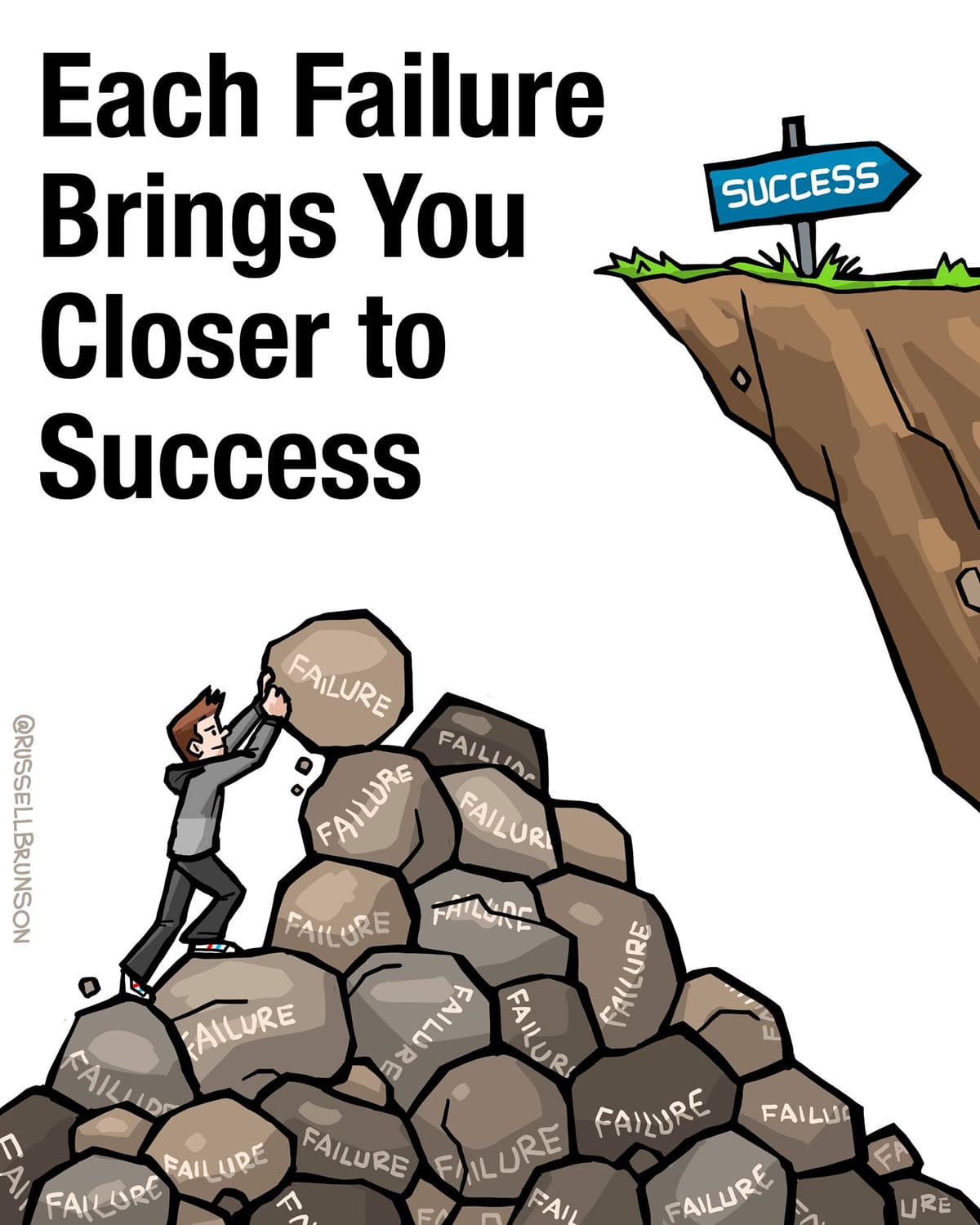
How do you know if it will work? Will it work the first time?
The Perfectionist wants things to be correct the first attempt. What they fail to realize is, they are ok with failure as long as it is on paper and not in reality. The "just do it" guy is ok with failure in the real world but hates trying to figure things out on paper. Everyone is okay with failure as long it is in the style they are ok with. As mentioned in previous posts, some of the best products/businesses came from a failed state. Many famous entrepreneurs are failures.
Some famous examples of failures that tried again. Elon Musk, Attempted to make a first version of PayPal (called X.com) that failed and then on his second try he was able to make PayPal. Oprah Winfrey, She was a failed TV anchor because she "wasn't fit for TV," later created and hosted the Oprah show. There are dozens of examples. These two show that if your idea doesn't work the first time try it again and fix what didn't work the first time you tried.
Marshmallow Tower
There is a social experiment known as the Marshmallow Tower, in this experiment a group of people are given marshmallows, spaghetti, and a couple extra limited materials, and are instructed to build the tallest tower that they can. The interesting thing in this experiment is when they compared kids to adults, kids regularly out preformed adults, including structural engineers. Why is this? It is because, adults strive to get it right the first time, kids strive to fail as they go. Well...maybe not strive to fail. Kids work through an iterative process, adding a little each time. Adults plan out every details and then start building. This method generally leads to unforeseen failures.
The key is to keep trying to figure out what works and what doesn't work.
What Else You Got Podcast
With our podcast What Else You Got, I am still learning how to make it work. Each time something seems to work, we try to focus on that part. The things that don't seem to work we rotate through and try something else, but we do try some of the failed things again to make sure it wasnt a timing issue, a content issue, a technical issue. Even with successes we try to rotate through what works to see if there is a better way of doing things. Yes this process is slow, but you can learn a lot from trying new things.
Success from failure
One of my favorite examples of success from failure, is Kevlar, bullet proof fabric. This was result of a failed chemical blend when trying to make another compound. Velcro was result of getting things stuck to a guys pants. The lightbulb, Edison found a 1000 ways not to make a lightbulb. What is a failure to some is a great success for others.
If it seems like it isn't working, try something else, and then try it again.
Image Credit: https://www.facebook.com/share/p/1B6QDoxVUE/