

Starting anything can be a challenge. It can be even harder when you want to make something to share. If you are anything like me, when sharing anything with anyone, you want it to be perfect. In the world of a new startup, you are playing fast and loose, when compared with a seasoned medium to large businesses. This doesn't have to be the case, if you do it right. I might not have it right but in this article I am going to outline what I have done so far in preparation for the release of our very first podcast. In a couple years I will look back and say I did something wrong. Today I am doing it as correct as I understand, balanced with what I think is actually needed for this stage of business.
Research
If you don't know what you need, do research. I spent almost a month researching how to start a podcast. And that is after I spend months researching how to best start a business. I will be sharing some of the knowledge gained but you really should get an understanding of why I suggest what I do below.
The Foundation
There are many ways to start a podcast, social media, and/or any business. When I had this idea, I knew I wanted to build a business even if only a small podcast comes from it. Why? I wanted the practice of starting a business and trying to grow it. I have other business ideas I want to work on, and I know that I need more experience before I am ready to launch those ideas. So, why not practice now.
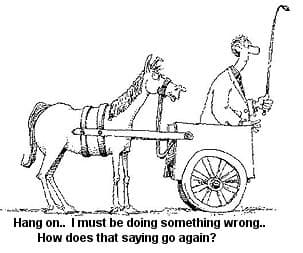
This phase of getting things set up is a literal case of cart before the horse. This basically means, you have things out of order. If you apply the idiom to the numbers 1, 2, 3, you could end up with 3, 1, 2. In some cases you can get this to work but many times it just wont work.
In my experience you could get the following done in almost any order, it just depends on how you want to do things. Below I have outlined how I got things set up.
LLC
One of the first things I did was form Scabbard Media LLC. This allows my business to own everything produced here and offers legal and economic benefits. By setting this up first it will make it easier to expand and take on other podcast shows with less overhead. I wont need to figure out how to move my first podcasts over if I wanted to do this later. I strongly recommend creating a LLC, just for the simple fact of you can separate your business efforts from your personal life. Yes, your business is part of your personal life, and it adds a layer where others can see the separation, which gives you protections.
In some cases you may need to get local business licenses to operate. Check with your state and local governments for their requirements for your type of business.
Bank
The very next thing I did is set up a bank account to start the separation between personal money and business money. Technically, you don't have to put any money in the account (unless the bank requires at least a deposit, this is the case for most banks). I put some money in the account, just what I could spare and what I thought it would take to start the business.
You could get a credit card for your business, but this is not necessary to start. In a large number of cases it can be a great benefit, but again it is not needed to get started.
Email/Domain
If you are keeping things simple you can just get a gmail, outlook, yahoo, or other email for free. Only downside to the free option is those emails usually end in @gmail, @outlook, @yahoo, ect. If you want one with your name and the name of your website you will need to do a little more work. The first thing I did was purchase a domain name. This is the set of words you type in the URL to get to a website. i.e. "scabbardmedia.com" You can get these from a variety of providers at varying costs and complexity. The one feature I would say to look for is some form of Privacy. Privacy basically means in this context that your private information will not be published in public record that you purchased the domain name. Most Domain name providers will offer this service and some will offer it for free, as others offer it for a fee. Try to get one that has it for free. Also try to find one that has DNS hosting included or for free. This will allow you to associate your domain to your website.
Once you have a domain name you can then look for someone to be an email provider. You can get the bundled with a ton of other software and services. It really comes down to what you need and want. For podcasting you really only need an email. For other business types, you may benefit from the other offerings that might be bundled with normal email providers.
Scabbard Media uses Zoho as our email provider.
Setting up the fun stuff
Everything to follow can be done in almost any order. The order I have the topics listed is what I would suggest for a generic business.
Website/Facebook
Depending on your business, you can do either or both of these. Facebook could serve as a substitute for a website but it does have many limitations. It does get you on social media and many places will accept it as a valid website option.
I like a full website, but this is just because of my background and how I wish to run my businesses. There are many options for this. For the majority of people, codeless websites will work just fine for your business. If you are trying to do something a little more unique or involved you may need a custom website to achieve what you want. Be sure to look to see if someone has the right tool for the job, if you dont have to build it, that is great.
For ScabbardMedia.com we use Podcastpage.io, because they offer a website tool that is tailored for podcasters. They have plenty of easy integrations which made setting up this site easy. It also supports podcast hosting and distribution and integration with other social media platforms. It even supports membership management, similar to other pay to support or join for exclusive content, this is all in one platform.
Social Media
This is where you can set up your social media presence everywhere that is most effective for your business.
Facebook/LinkedIn - Great for an online presence, this is if you don't intend to be heavy on posting content, just enough to show your business. Great for reaching middle age to older audience.
Instagram/TikTok - Great if you intend to post regularly (about every week to every couple of hours). These are very involved for your online presence. Otherwise great for reaching a younger audience.
Youtube - Great if you intend to provide educational, informational, entertainment in video format. Great for reaching all age groups.
Your own website - People don't think of this as social media, but people go to your site to interact with your company. Make it a great experience for other to come visit you at your home.
Other - There are many other platforms I am far less familiar with where I cant advise as well on those sites.
The key with social media is to be where your target audience is. Build content that best fits each platform and know your audience.
Payment Portals
This should be one of the last things to set up. Unless you have customers or people who want to pay you today, there is no rush on this step. Research all the fees related to how you collect payment. Factor this into your costs. Depending on how you take money or send out invoices, it may be free, a low cost, or rather expensive if you choose the right or wrong one. I have only set up the common ones I wish to support at this time. Only because I don't have a need for every platform. I know that for me I need to have the right payment methods to 1. be convenient for those who wish to give me money 2. support the various methods in which I take in money. (subscriptions versus one time payments) 3. easy for me to do business with.
Accounting
Yes this is later on my list, but possibly one of the most important things to do. I only have it later because you don't need to solve this day one, you just need to be aware of it. At a minimum, keep track of all the money you spend, be sure to record the receipts, either keep them digitally or keep a physical copy. Keep track of the money you bring in, who, how much, why, and when. If you have high enough number of transactions get an accountant or accounting software.
Taxes
Be aware of the taxes in your area. The US has many different taxes for businesses, and states have different rules as well. Below is a short list of taxes that you need to be aware of, they may or may not apply to you. This is not an exhaustive list, I probably missed a couple.
Federal Business Taxes
Self Employment Tax
Social Security
Payroll Tax (you and your employees/contractors)
Sales Tax
Value Added Tax or VAT (In some places, EU)
Others (know what taxes apply to your business)
Be very much aware of the above. Too many business fail because they missed these.
Other Stuff
There are various other stuff that can easily get overlooked. Make a list of everything you find that your business needs to keep track of on a regular basis.
Filings
These are reports you need to file with your state generally. These basically say, "Yes I am still in business" or "This is how much I made, and how much tax I owe." Depending on your jurisdiction you may need to file other paperwork to be allowed to operate.
Office Space
Generally as one or a handful of people, you can operate out of your house, apartment or even your garage. If you really need office or warehouse space, be aware of the cost. There are many places that will offer space to a small group of people for a rather reasonable price. Be aware this is an extra cost to your business. Figure out if you can run your business out of where you live or if you really need the space.
Business Plan
This is a great document to have. It will help you figure out your idea before you go through all these steps and then realize it isn't a good idea, or not an idea you are really interested in and avoid having opened up all of these resources when you don't intend to use them. Go through all the steps of setting up a good one. If you need guidance in writing one, find your local SCORE chapter. SCORE offers free resources and mentoring to help you start your business. I did this for one of my business ideas and learned a lot. That experience helped me write many other business plans that I am currently in the process of executing on.
Wrap up
There are so many things that go into starting a business. This is only a quick guide to what I have done and what I am aware of so far. I really wanted to share what I know so far, and to document where I am at, so I can look back and see how right or wrong I am. As well as when I go to write another one of these or have it in a podcast I can reference the differences of what I have learned from today.
If you have a business idea, figure out what you need to get started and jump in.
Image Credit:
Photo by Pixabay: https://www.pexels.com/photo/man-in-yellow-safety-vest-climbing-on-ladder-159358/
Cartoon Taken from: https://tborash.wordpress.com/2012/10/14/always-put-the-cart-before-the-horse/
Disclosure: Some links are affiliate links and we may benefit monetarily when used.